❝ she said i'm lookin' like a bad man, smooth criminal. ❞
this is the legacy of
magnus monterrosa.
an original portrayal:
young, modern, and influenced by
x-men's magneto.
.
.
❝ i can be louder, louder than you want me to be.
this could be louder, louder than you want it to be. ❞

Magnus was born on a small island in the South Pacific. The nation was a multi-cultural sanctuary; tiny and nondescript, but a safe place for mutants to hide from persecution or to pause on their journey to a new life. The term “nation” was a bit loosely used. By definition, it was more of a ramshackle gathering of those with nowhere else to go.
With so many coming and going, the island developed its own language, and true to its purpose, it came to be known simply as 'Sanctuary' . While the country wasn’t wealthy by any conventional means — not in resources, capital, economy — it was rich in its own way. The mutants of Sanctuary and their families were proud of their homes, their communities. Dirt-and-board homes grew into sprawling cities, paved with intricate stoneways and sophisticated irrigation, and architecture despite its size.
The people of Sanctuary considered themselves wealthy because they were happy and proud.
There was only a handful of families that had been there since the beginning. They had always been modest, working people, families who had fled and built something amazing. It was their steadfast dedication to their neighbors and the goal of their little island that created the Council. The families of the Council could be depended on to listen to their community, to work to improve. And when they didn’t have the answers, they would defer to those citizens who did. The Monterrosas were one such family.
In the early nineties, the Monterrosas was graced with a lovely baby boy. Magnus. He, even as a child, was spirited, strong-willed, but as hard-working and loving as his family before him.
No one ever expected their quiet island to attract any untoward attention. But while Magnus was in his teens, abroad in America for a brief summer visit with his family —— his first time leaving home —— the peaceful island of Sanctuary was there one moment and gone the next.
Accusations flew, but as always, humans had the final word: they claimed the uranium deposit buried beneath Sanctuary was by the mutants of the island to strengthen themselves, readying to attack. It was lies, but the nation was left in ruins, millions dead and the whereabouts of any survivors unknown.
And the Monterrosas? Assassinated in their drive back to their hotel, Magnus watching through bleary eyes as his mother bled out in his lap. The bullet that passed through his skull hadn’t killed him. Some days, he wishes it had.
He and his family, nothing more than tourists, had been marked as citizens of Sanctuary when they'd entered the country. They suspected Magnus to be powerful, as was the spun-narrative for every mutant of Sanctuary. Having lived, a decision was made to keep him in America. Now, everywhere he goes, eyes. His apartment wired, bugged. He can’t so much as breathe without someone else hearing about it.
He doesn't know what they want, why he's kept drugged so that his powers are always out of reach. Why they would keep him alive if they didn't wish him to do something for them. He has no idea what's become of those left behind in Sanctuary. It's possible his handlers are lying when they tell him the price for causing trouble will fall on the heads of the survivors, but he can't bring himself to risk it.
Magnus has lived this way for eight years.
Text
in an alternate universe...

The X-Men.
Instead of remaining confined to a particular radius in New York City, after much argument from a Professor Charles Xavier, Magnus is generously relocated to the professor's school.
He resents the place, resents the optimism of it, the pacifistic lifestyle preached by Charles Xavier. The only consolation is that he's surrounded by other mutants.
The Boys.
The Monterrosa family wasn't much different than any other family of refugees, fleeing into America so that they and their unborn son might survive.
They did not expect the generosity with which they were met to be a lie.
It was a false promise: a representative from Vought, who they knew little of, promised quick entry and citizenship if a contract was signed. The details weren't entirely clear in the moment, beyond special vaccinations that would be given to their son once he was born. With others signing on the dotted line, they did the same.
From the day he was born and Compound V injected in his veins, Magnus became Vought property. The young children were easy marks, and few ultimately had the compound stabilize within them.
Pleased with the strength of Magnus' abilities once he had matured, he was removed from his parents at 17, brought to New York so an eye could be kept on him until the proper position or use for him arose.
.
.
❝ the boy who fell into the sky
had no one there to watch him cry ❞
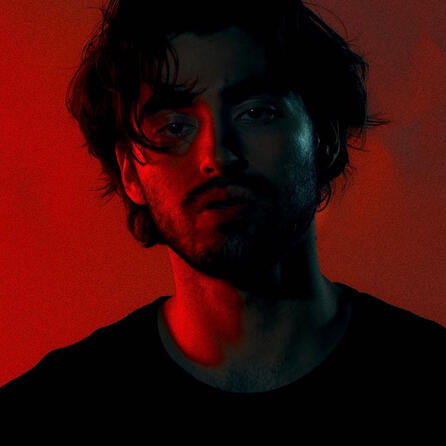
For Magnus, everything is always numb.
Monday mornings, he wakes up to a uniformed man sliding poison into his veins to smother his powers. It drains him, dulls his nerves.
He spends his days trying to feel — whatever it takes. He chases every high — drugs, fighting, fucking. He doesn't know what the point of it all is, or what's intended for him. He doesn't even know what's become of his own people.
Or at least, those that survived.
The bullet that pierced his skull on the day the government took his parents from him left him with permanent damage. He often wears colored sunglasses to avoid the migraines, but there's little to be done about the sudden moodswings.
Desperately, he wants to be free. But he's too far in the dark, hostage to the threat that if he makes trouble, his handlers will make trouble for the survivors from his home. Every day, he wishes he could be more than a wasted-away version of himself.